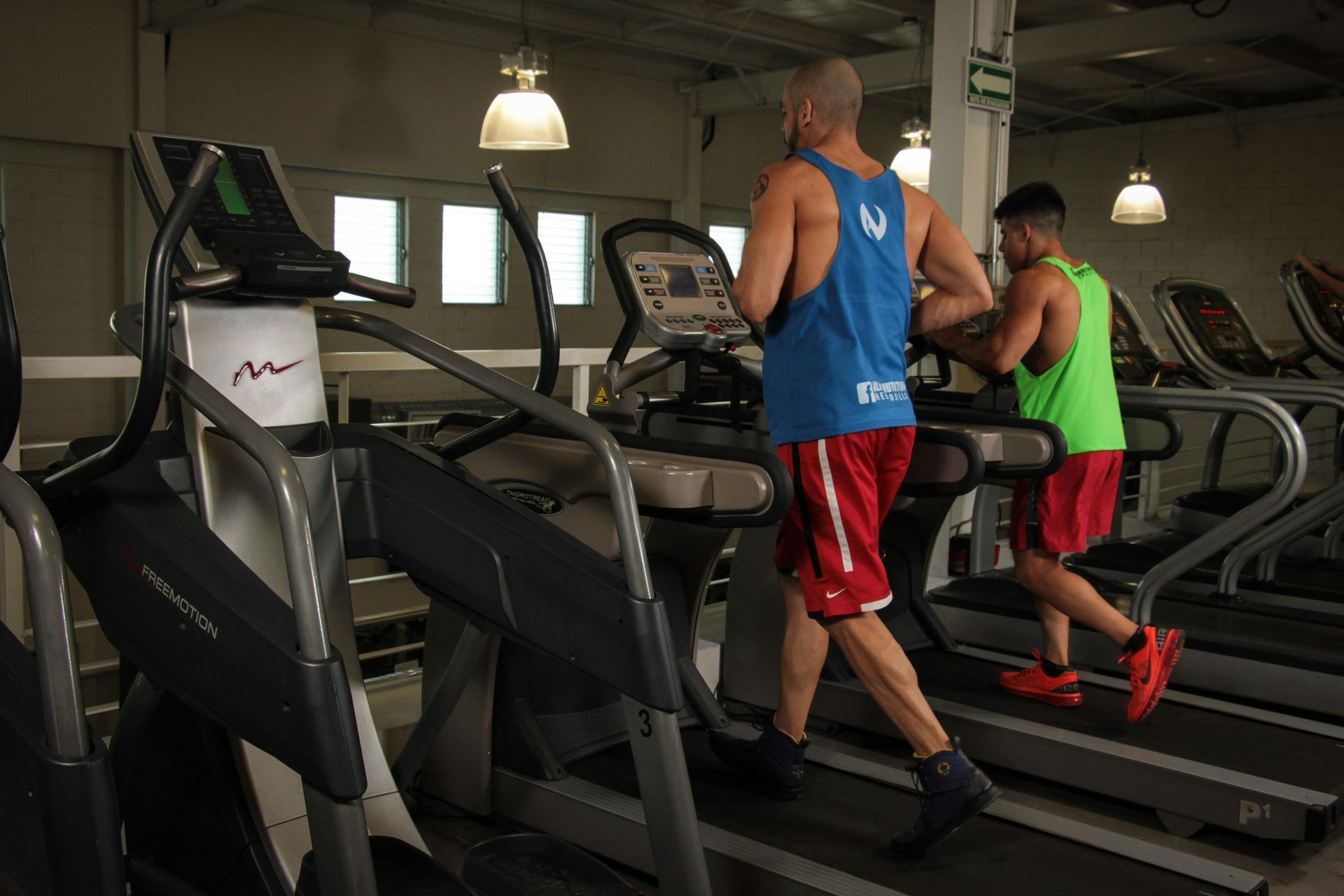
A: This is one of the most common questions I hear, and the honest answer is that both have a place. Cardio and strength training support weight management in different ways. Cardio tends to burn more energy during a session, while strength training helps you build and keep muscle, which shapes body composition and supports long-term health.
The best exercise for weight management is the one you can do consistently, ideally combining both types. Just as important, exercise works best alongside balanced eating. Movement alone rarely produces large weight changes, but it plays a powerful role in maintaining a healthy weight and protecting your health at every size.

How does cardio help with weight management?
Cardio, or aerobic exercise, includes activities that raise your heart rate for a sustained period, such as brisk walking, cycling, swimming, jogging, or dancing.
It burns more energy per session
Minute for minute, moderate-to-vigorous cardio usually uses more energy than a typical strength session. That is why it has long been the go-to choice for weight loss. Over weeks and months, regular cardio can contribute to a modest reduction in body weight and body fat.
It supports heart and metabolic health
Aerobic exercise strengthens the heart and lungs, helps lower blood pressure, and improves how the body uses insulin. These benefits occur even when the number on the scale barely moves, which is an important reason not to judge exercise by weight alone.
It is easy to start
Walking needs no equipment, no gym, and little skill. For beginners, a daily walk is one of the simplest, most sustainable ways to build an exercise habit.
The limitation: Cardio on its own does little to build muscle. When people lose weight through dieting and cardio alone, part of that loss can come from muscle rather than fat.
How does strength training help with weight management?
Strength training, also called resistance training, means working your muscles against resistance. That can be free weights, machines, resistance bands, or your own body weight in moves like squats, push-ups, and lunges.
It helps preserve and build muscle
Muscle naturally declines with age, and it can also be lost during weight loss. Strength training sends a signal to the body to keep that muscle. This means more of the weight you lose is likely to come from fat, which supports a healthier body composition.
It may modestly support metabolism
Muscle uses slightly more energy at rest than fat tissue does. The effect is often exaggerated online, as adding a few pounds of muscle will not dramatically raise your daily calorie burn. Still, keeping muscle helps limit the drop in energy needs that often happens with weight loss and aging.
It changes how your body looks and functions
Two people can weigh the same but have very different amounts of muscle and fat. Strength training can reduce waist size and improve strength, balance, posture, and bone density, even when scale weight changes only a little.
The limitation: A strength session usually burns fewer calories than the same amount of time spent on cardio, so strength training alone may lead to slower changes on the scale.
What does the research say?
One of the clearest comparisons comes from an eight-month randomized trial in sedentary adults with overweight or obesity. Participants did aerobic training, resistance training, or both, without a diet plan. The aerobic and combined groups lost more body weight and fat mass than the resistance-only group. However, the resistance and combined groups gained lean muscle, while the aerobic-only group did not. The combined group saw the greatest improvement in overall body composition.
In simple terms, cardio was better for reducing weight and fat, strength training was better for building muscle, and doing both delivered the most well-rounded result.
| Cardio | Strength training | |
|---|---|---|
| Energy burned per session | Higher | Moderate |
| Effect on scale weight | Greater reduction | Smaller change |
| Effect on muscle | Little to none | Builds and preserves muscle |
| Body composition | Reduces fat | Improves fat-to-muscle ratio |
| Other key benefits | Heart, lung, and blood sugar health | Strength, bone density, balance, daily function |
This is why major health guidelines recommend both. The World Health Organization advises adults to get at least 150 to 300 minutes of moderate aerobic activity per week, plus muscle-strengthening activities on two or more days.

Where does nutrition fit in?
Exercise is powerful for health, but it is difficult to out-exercise an eating pattern that does not meet your needs. Food and movement work as a team.
Eat enough protein
Protein helps your muscles repair and grow after strength training, and it helps keep you full. Include a source of protein at each meal, such as eggs, Greek yogurt, fish, chicken, tofu, beans, or lentils.
Fuel your workouts
Carbohydrates are the body’s preferred fuel for activity. Cutting them too far can leave you tired, weak, and more likely to skip workouts. Whole grains, fruit, potatoes, and legumes are good choices.
Watch for compensation
Some people feel hungrier after exercise or unconsciously reward themselves with extra food. This is normal. Planning balanced meals and snacks around your workouts can help you refuel without overdoing it.
A simple weekly plan for beginners
If you are new to exercise, start gently and build up over several weeks.

Two to three days
Work the major muscle groups, including legs, back, chest, shoulders, arms, and core. Start with body weight or light weights and focus on good form.
Three to five days
Begin with 20 to 30 minutes of brisk walking, cycling, or swimming, and gradually increase the time or intensity.
More daily movement
Take the stairs, walk during phone calls, and break up long periods of sitting.
At least one rest day
Recovery is when your muscles adapt and get stronger.
You can do cardio and strength training on separate days or combine them in the same session. Both approaches work. Choose the one that fits your schedule.
Common myths to let go of
When should I talk to a healthcare professional?
Check with your doctor before starting a new exercise program if you have heart disease, high blood pressure, diabetes, joint problems, or are pregnant, or if you have been inactive for a long time. Stop exercising and seek medical help if you feel chest pain, severe shortness of breath, dizziness, or faintness during activity.
It is also worth seeking support if exercise starts to feel like punishment for eating, or if you feel anxious or guilty when you miss a workout. Movement should support your health and well-being, not control it.
Conclusion
So, which is better for weight management: strength training or cardio? The best answer is both. Cardio helps burn energy and supports heart health, while strength training helps you build and keep muscle for a healthier body composition. Paired with balanced, satisfying meals, the combination gives you the most complete results. Above all, choose activities you enjoy, because the exercise you keep doing is the one that works.
Eat to fuel your activity
At Coral Crest Nutrition, the goal is to help you build an eating pattern that fuels your activity, supports your goals, and fits your life. If you would like personalized guidance on what to eat around your workouts or how to manage your weight without extreme diets, nutrition counseling can help you create a plan that lasts.
Explore Personal TrainingFor more info visit:
References
- Willis, L. H., Slentz, C. A., Bateman, L. A., Shields, A. T., Piner, L. W., Bales, C. W., Houmard, J. A., & Kraus, W. E. (2012). Effects of aerobic and/or resistance training on body mass and fat mass in overweight or obese adults. Journal of Applied Physiology, 113 (12), 1831–1837. https://doi.org/10.1152/japplphysiol.01370.2011
- Westcott, W. L. (2012). Resistance training is medicine: Effects of strength training on health. Current Sports Medicine Reports, 11 (4), 209–216. https://doi.org/10.1249/JSR.0b013e31825dabb8
- Bull, F. C., Al-Ansari, S. S., Biddle, S., et al. (2020). World Health Organization 2020 guidelines on physical activity and sedentary behaviour. British Journal of Sports Medicine, 54 (24), 1451–1462. https://doi.org/10.1136/bjsports-2020-102955